
2030 - Resilience
"The ability to bounce back, recover quickly, and adapt well after facing trouble, stress, or hard times."
Back in 1996 the Sustainable Millennium Project predicted that by the year 2030, summers would be much hotter and storms more frequent and damaging. Our predictions were inaccurate on at least three counts. First we were too conservative, What we predicted has come some five years sooner and is worse than we predicted. Second, we underestimated the frequency and severity of wild fires. Third, we failed to predict that food security would be recognised as a national threat by the year 2026.
We were fairly confident, nevertheless, that as our predictions came to be seen as correct, people would realise how urgent was the need for mitigation, which would become much more of a focus.
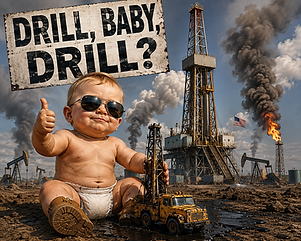
Instead, the emphasis has been on resilience and another mistake is being made. It is now imagined that climate change has "happened" and we simply need to develop resilience to the conditions experienced during 2026.
Resilience, Recovery and Reconstruction

There are two ways of looking at these new "3Rs".
As with Covid in 2020, we have responded not pro-actively but reactively. The UK government was warned about the possibility of a pandemic, but did little to prepare. When one came, the response in the form of chaotic lockdowns, emergency research programmes and haphazard attempts to procure PPE saw us somehow muddle through. Will we be able similarly to muddle through the next fifty years of worsening storms, heatwaves, wildfires and food shortages?
Resilience can be reacting to a disaster by stoic recovery and rebuilding.
Resilience can be planning for what is likely to come such as the construction of reservoirs, the urgent development of new seed strains and investment in transport infrastructure that can cope with landform and climate change.
Listening and taking concerns seriously - the first step to resilience
What image of the year 2050 do children alive today have? The natural state of young children is one of optimism, hyper-optimism in the youngest, but this tends to decline into adolescence because negative experiences register more strongly than positive ones. We are going to have to talk to children. For the first quarter century of the new millennium, I avoided doing that because dystopian environmentalism received a very bad press during the 1990s. Children, I thought, should at least have a happy and carefree childhood for as long as that can last into adolescence. Such a position is no longer tenable if it ever was. Research is now showing that children and adolescents are beginning to suffer from growing and potentially damaging levels of anxiety and distress about what they imagine coming decades hold for them. The immediate cause of this distress is not being listened to and not having their concerns taken seriously by those close to them. The perception of insufficient action by governments also figured prominently, particularly in non-democratic regimes and in the poorer nations of the global south.

Learning from adolescents who already live further down the highway to hell

Living in the UK, a country that has so far experienced only a small number of relatively minor floods, wildfires and heat events, it is easy to forget that climate change must be seen and treated as a global phenomenon. Children and adolescents in parts of Canada, for example, have already experienced what some adolescents in the UK fear. Much has been learned from major wildfire events in Alberta which has experienced new, unprecedented, repeated and catastrophically destructive wildfire events over large areas for more than a decade. Although these events have shown recovery and reconstruction in action, they have also shown that the impact of climate change on youth health and welfare is serious, significant and potentially long-lasting.
By way of contrast, it is reported that adolescents living in the slums of Surat city in Gujarat do not debate or express anxiety about climate change. They live with it. They cope whenever floods engulf their houses, they take steps to protect themselves from the flood associated diseases of Malaria and Leptospirosis and they observe how their communities cope with regular economic and infrastructure damage. They have learned to link almost every concern with health, take responsibility for their own health and define it not merely as absence of illness but in terms of coping with the afflictions that beset them from their environment. Is there anything to be learned from youth living in such circumstances?
